How to efficiently machine shaped parts on CNC mill-turn machines?
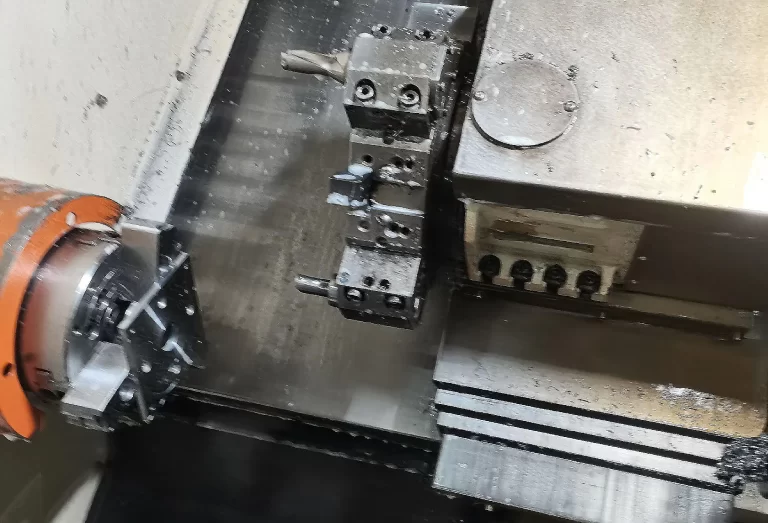


Deep hole machining refers to the machining of holes where the ratio of hole depth to hole diameter exceeds 5.
As the hole diameter decreases and the hole depth increases, the processing difficulty also increases.
This makes deep hole machining a challenging process.
Deep hole machining processes also face issues such as difficulty in chip removal, poor cooling, and rapid tool wear.
These problems impose higher demands on the application and control of deep hole machining technology.
In this context, conducting an in-depth analysis of deep hole machining methods and technical key points holds significant importance.
Combining this analysis with the characteristics of deep hole machining helps enhance mechanical processing capabilities.
Deep hole machining primarily manifests its characteristics in three aspects.
First, the length-to-diameter ratio is greater than that of conventional hole machining.
The high length-to-diameter ratio causes the tool to deviate and vibrate when cutting deep into the workpiece due to its slender structure.
Tool deviation can cause poor hole straightness and compromise dimensional accuracy.
In industries such as aerospace and high-end equipment manufacturing, component precision requirements are extremely stringent.
Even minor deviations can make parts fail to meet design specifications.
This forces scrap, significantly reduces production efficiency, and substantially increases production costs.
Second, in deep hole machining, the cutting zone exists in a closed or semi-closed environment.
In such conditions, cutting heat is difficult to dissipate and accumulates continuously in the cutting zone, causing tool temperatures to rise rapidly.
Excessively high temperatures accelerate tool wear and shorten tool life.
Additionally, chips that remain trapped inside the deep hole resist smooth removal.
This severely hinders subsequent machining processes and disrupts normal operations.
Third, the hole channels are deep and long, and the processing environment is unique.
Because of this, cutting fluid struggles to penetrate smoothly into the cutting zone, reducing its cooling and lubrication effectiveness.
When the supply of cutting fluid is insufficient or it fails to perform effectively, two issues arise.
On one hand, the system cannot dissipate cutting heat in time, which accelerates tool wear.
Conversely, the coolant may be unable to flush chips out of the hole effectively.
This causes the chips to rub intensely against the tool and workpiece, further worsening the machining conditions.
Ultimately, this creates surface defects such as scratches and increased surface roughness.
In precision machining and other processes with stringent surface quality requirements, these issues can severely impair product performance and service life.
Gun drills are highly efficient tools for deep hole machining, primarily used for deep holes with relatively small diameters and high precision requirements.
A V-shaped chip evacuation groove distinguishes gun drills.
During machining, the system injects coolant from the center of the tool shank and directs it through pre-set channels within the tool to reach the cutting zone.
The combined action of cutting force and coolant expels chips along the V-shaped chip evacuation groove.
Gun drills offer high machining accuracy, ensuring good straightness of the machined holes and low surface roughness of the hole walls.
However, their tooling costs are relatively high, and their machining efficiency lags behind that of other machining methods.
Additionally, due to its unique construction, gun drilling is difficult to repair when wear or damage occurs.
Its complex internal structure and precise manufacturing process increase maintenance costs and downtime.
In terms of material adaptability, when gun drills cut materials with excessive hardness, the sudden increase in pressure on the tool accelerates wear.
When they face materials with excessive toughness, chips become difficult to break and remove effectively.
Therefore, machinists must select gun drill tools based on the specific characteristics of different materials to ensure smooth processing.
The BTA (Boring and Trepanning Association) internal chip removal deep hole drill is a type of internal chip removal deep hole machining tool.
It is primarily used for machining large-diameter deep holes.
The working principle of BTA involves coolant flowing into the cutting zone through the gap between the drill rod and the hole wall.
After cooling and lubricating the cutting zone, the coolant transports the chips out through the specially designed chip evacuation channels inside the drill rod.
BTA machining offers high processing efficiency and good tool durability.
It also maintains stable cutting performance over an extended period.
However, this machining method imposes high requirements on machine tool performance.
It necessitates installing a dedicated cooling and lubrication system.
This requirement increases equipment costs and maintenance complexity.
The spray-suction drilling method combines the advantages of both external and internal chip removal.
This makes it suitable for machining medium-diameter deep holes.
The working principle of spray-suction drilling involves utilizing the jet effect.
It relies on a special structural design that enables coolant to flow at high speed within the drill rod.
This flow generates a powerful suction force that draws chips out through the chip removal channel.
The advantages of the spray-suction drilling method include excellent chip removal performance.
This effectively prevents chip buildup in the hole that could affect processing quality.
It also offers high processing efficiency, capable of meeting certain production rhythm requirements.
Additionally, it has relatively low performance requirements for machine tools, thereby reducing equipment investment costs.
However, this processing method features a relatively complex tool structure.
It also has high manufacturing precision requirements, which increase the difficulty and cost of tool production.
To address the unique challenges of deep hole machining, machining tools must meet higher requirements.
These include hardness, strength, wear resistance, and heat resistance.
The advantages and applications of commonly used tool materials are as follows:
High-speed steel tools are relatively cost-effective and are widely used for deep hole machining of non-ferrous metals such as aluminum alloys with lower hardness.
They can meet certain requirements for machining accuracy and efficiency, providing an economical and practical option for deep hole machining;
Carbide tools feature outstanding hardness and excellent wear resistance.
When machining ordinary carbon steel and alloy steel, they demonstrate exceptional cutting performance and high durability, ensuring stable and efficient machining;
Cubic boron nitride tools have higher hardness and heat resistance compared to other materials.
When processing high-hardness materials such as quenched steel and cold-hardened cast iron in deep hole machining, these tools can maintain excellent cutting performance even in high-temperature environments.
This capability ensures processing precision and efficiency.
Properly setting the tool rake angle can effectively reduce cutting deformation and cutting force, thereby lowering cutting power consumption.
An excessively large front angle reduces the strength of the tool’s cutting edge.
Therefore, machinists should select the front angle parameters of the tool based on the workpiece’s material properties.
They should also consider the specific machining conditions when performing deep hole machining.
For example, machinists should appropriately increase the front angle for materials with high plasticity.
The primary function of the rear angle is to reduce friction and wear between the tool’s rear face and the machined surface of the workpiece.
An excessively large rear angle reduces the tool’s wedge angle, thereby weakening the tool’s strength.
When performing deep hole machining, machinists should determine the appropriate rear angle size.
They should base this decision on a comprehensive consideration of tool durability and machining accuracy.
Reasonably setting the rake angle can effectively control chip flow direction.
In deep hole machining, technicians typically set the rake angle to a positive value.
This directs chip flow toward the unmachined surface, preventing chips from scratching the machined surface and facilitating chip removal.
Experts categorize tool guidance structures into single-guide structures and double-guide structures.
Among these, single-guide structures offer simplicity but limited guidance accuracy.
Manufacturers use them for deep hole machining with lower precision requirements.
Double-guide structures greatly improve tool straightness and machining accuracy.
This leads manufacturers to apply them in high-precision deep hole machining commonly.
The selection of appropriate cutting parameters during deep hole machining directly affects machining quality, efficiency, and tool life.
Cutting parameters mainly involve three key elements: cutting speed, feed rate, and cutting depth.
Determining cutting speed requires comprehensive consideration of several factors.
These include the material properties of the workpiece, the performance characteristics of the cutting tool, and the processing requirements.
During deep hole machining, an excessively high cutting speed can significantly increase the number of friction events between the tool and the workpiece per unit time.
This leads to a marked acceleration in tool wear rate and a sharp rise in temperature within the cutting zone.
As a result, the tool’s lifespan decreases, and the machined surface microstructure changes, degrading surface quality.
Conversely, an excessively low cutting speed reduces machining efficiency.
In deep hole machining environments, the relatively enclosed cutting zone prevents effective dissipation of cutting heat.
To maintain tool durability and ensure the stability of machining quality, the cutting speed is typically set lower than that for ordinary hole machining.
Taking ordinary carbon steel machining as an example, machinists generally set the cutting speed for ordinary hole machining at 100–200 m/min.
For deep hole machining, they reduce the cutting speed to 50–100 m/min.
They further optimize and adjust the speed based on the tool material.
The feed rate directly affects machining efficiency and surface quality.
An excessive feed rate increases cutting force.
This leads to tool vibration and workpiece deformation.
As a result, machining accuracy decreases and surface roughness increases, making it difficult to meet high-precision machining requirements.
Conversely, an insufficient feed rate reduces machining efficiency, thereby extending the machining cycle and increasing production costs.
When determining the feed rate, machinists should fully consider several factors.
These include tool durability, workpiece material hardness, and dimensional accuracy requirements.
For example, machinists should appropriately reduce the feed rate when machining materials with higher hardness.
Machinists should select the cutting depth based on the tool strength and workpiece processing requirements.
During deep hole machining, the tool has a relatively large length-to-diameter ratio and lower rigidity.
If the cutting depth is too large, the tool is highly prone to breaking under cutting forces or causing severe deviations in processing accuracy.
Generally, during the rough machining stage, machinists can appropriately increase the cutting depth within the limits of the tool and machine tool load capacity.
They typically control the cutting depth between 0.5 and 2.0 mm.
During the finish machining stage, machinists should control the cutting depth between 0.1 and 0.5 mm to ensure machining accuracy and surface quality.
A reasonable workpiece clamping method directly affects the accuracy and stability of deep hole machining.
The three commonly used workpiece clamping methods are two-end three-jaw clamping, four-jaw chuck clamping, and center clamping.
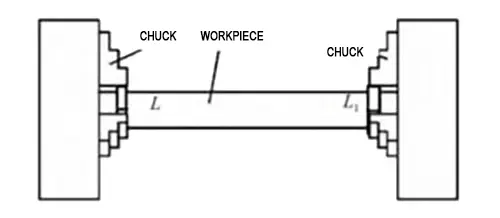
First, two-end three-jaw clamping (see Figure 1).
This method features convenient operation and automatic centering.
The synchronized movement of the three jaws enables rapid positioning and clamping of the workpiece.
This makes it widely used in deep hole machining of ordinary shaft-type parts.
However, it is less effective when clamping eccentric or irregularly shaped workpieces.
Second, operators use four-jaw chuck clamping.
They can independently adjust each jaw to meet the positioning requirements of workpieces with different shapes flexibly.
It is more suitable for clamping eccentric, square, or other irregularly shaped workpieces.
Third, center clamping.
This clamping method uses two centers to support the workpiece.
It ensures stability during rotation and reduces deformation caused by the workpiece’s self-weight or cutting forces.
Its primary application is deep hole machining for long shaft-type workpieces.
Selecting the appropriate workpiece clamping method depends on the specific characteristics and machining requirements of the workpiece.
Ensuring the clamping’s firmness and accuracy is key to reducing machining errors and improving the quality and efficiency of deep hole machining.
Deep hole machining involves a highly enclosed environment and poor heat dissipation.
Given these characteristics, selecting the appropriate coolant and lubrication methods is critical.
Coolant effectively reduces high temperatures generated during cutting.
It prevents tool wear caused by overheating and reduces friction between the tool, workpiece, and chips.
Additionally, it aids chip removal, ensuring continuous machining.
Common cooling lubricants include cutting oil, emulsion, and synthetic cutting fluid.
Among these, cutting oil significantly reduces cutting force and friction.
This minimizes tool wear and improves surface quality.
However, it has relatively weak cooling capacity.
Cutting oil is typically used in precision deep hole machining of parts with strict lubrication accuracy requirements.
Emulsions have excellent cooling performance.
They quickly remove cutting heat and effectively lower cutting temperatures.
However, their lubrication performance is relatively inferior.
Therefore, they are widely used in rough machining or when processing materials with high cooling requirements.
Synthetic cutting fluids combine excellent cooling, lubrication, and rust prevention functions.
They allow flexible adjustment of components to suit various complex machining conditions.
This makes them the most commonly used coolant in deep hole machining.
In terms of cooling and lubrication methods, the commonly used ones include external cooling with internal chip removal, internal cooling with internal chip removal, and internal cooling with external chip removal.
Gun drilling is commonly used for small-diameter deep hole machining and typically employs the external cooling with internal chip removal method.
The system injects cutting fluid from the exterior of the tool holder.
It directs the fluid through the internal channels of the tool to the cutting zone.
Then, it expels the chips through the V-shaped chip evacuation groove.
BTA machining is suitable for large-diameter deep holes and typically employs the internal cooling and internal chip evacuation method.
Coolant flows into the cutting zone through the gap between the drill rod and the hole wall.
Meanwhile, the system removes chips through the internal chip evacuation channels within the drill rod.
Operators use spray-suction drilling for medium-diameter deep holes, typically employing internal cooling and external chip evacuation methods.
This method relies on the spray effect to achieve high-speed coolant flow within the drill rod, efficiently sucking out chips.
Deep hole machining technology faces numerous challenges during its application.
Analyzing the characteristics of deep hole machining and exploring its methods and technical key points are essential for enhancing machining quality and efficiency.
This process involves challenges such as chip removal, tool wear, and maintaining hole straightness, all of which require careful consideration.
By understanding and addressing these challenges, manufacturers can improve the precision and productivity of deep hole machining operations.
During actual manufacturing, technicians must strategically use technical methods to address chip removal, cooling, and tool wear issues.
In the future, materials science and manufacturing technology will continue to advance.
Deep hole machining technology will achieve greater breakthroughs.
These advances will provide stronger technical support for the high-quality development of industries such as aerospace and automotive manufacturing.